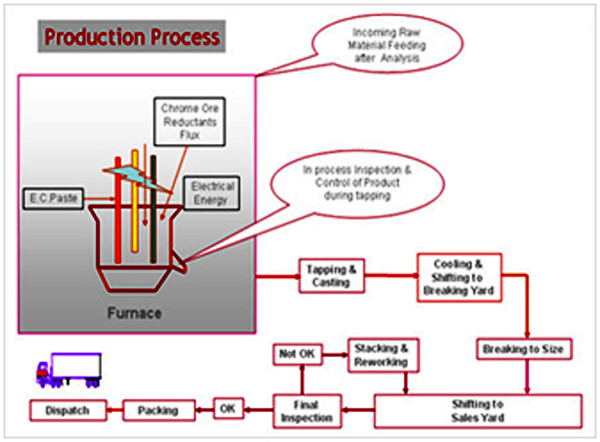
Ferrochrome (FeCr) is a corrosion-resistant alloy of chrome and iron containing between 50% and 70% chrome. Producing it is essentially a carbothermic reduction carried out at very high temperatures: chrome ore — an oxide of chromium and iron — is reduced by coal and coke to form the iron-chromium alloy. The heat comes from an electric arc struck between the electrode tips and the furnace hearth, reaching about 2800°C — making it a highly power-intensive process.
Six stages from raw ore to dispatch-ready ferrochrome.
Chrome ore — an oxide of chromium and iron — is charged into the furnace together with coal and coke, which act as the reducing agents.
In the electric-arc furnace, an arc struck between the electrode tips and the hearth reaches around 2800°C. This reduces the ore into molten iron-chromium alloy — and consumes large amounts of electricity.
🌡️ ~2800°C arc temperatureOnce enough smelted ferrochrome has gathered in the hearth, the tap hole is drilled open and the molten metal and slag rush out into a sand bed or cast-iron ladles.
The molten metal cools and solidifies into solid cakes of ferrochrome.
The cakes are moved to the handling yard, where they are cooled, cleaned and broken into pieces according to each customer's size specification.
After thorough quality checks, the sized ferrochrome is packed and dispatched to customers.
Carbothermic smelting · Built-in quality · Ready for dispatch


 web development india